How to Cover Dark Circles Without It Looking Like Makeup

Short answer: to cover dark circles without it looking like makeup, use a small amount of concealer in a shade that matches your skin tone (or at most one shade lighter), place it only on the darkest part of the under-eye area, tap it in rather than rubbing, blend the edges until they disappear and check the result in daylight. Most “costume” looks come from using too much product or the wrong shade, not from using concealer at all.
What concealer can and can’t do
Concealer reduces the look of dark circles. It doesn’t change what causes them. Dark circles have several possible causes: genetics, natural pigmentation, thin skin that shows the blood vessels underneath, shadows from the shape of your under-eye area, and sometimes allergies or tiredness. Cosmetics can’t treat any of those. They can make the area look more even in photos and in harsh light, which is usually the actual goal.
If dark circles appear suddenly, affect only one side, or come with swelling or pain, speak to a GP rather than reaching for makeup.
Why concealer ends up looking obvious
- Too light. A shade that’s much lighter than your skin reads as grey or a pale mask under the eyes.
- Too much. A thick layer settles into fine lines and looks cakey by lunchtime.
- Wrong placement. Covering the whole eye area instead of just the darkest part creates a visible patch.
- Hard edges. If the edge of the product isn’t blended out, your eye will find it.
- No prep. Concealer on dry, tight skin clings to dry patches.
Step by step
- Prep. Cleanse, apply your moisturiser, then wait about a minute so it sinks in. If you use SPF, apply it before concealer.
- Colour-correct only if you need to. Blue or purple shadows on lighter skin respond to a peach or salmon tone. Brown shadows on medium to deeper skin respond to an orange or red-orange tone. Use a very small amount. If your circles are mostly shadow rather than colour, skip this step.
- Dot, don’t swipe. Place two or three tiny dots at the inner corner of the eye and in the hollow just below it. That’s usually where the darkest area is.
- Tap and blend. Use your ring finger (it presses lightly) or a damp sponge. Pat the product in and blend the outer edges outwards and slightly upwards. Don’t rub.
- Build only if you must. If it still looks dark, add one more tiny dot to the darkest spot and tap again. Thin layers always look better than one thick one.
- Check the light. Look in natural light near a window, then in bathroom light. Phone flash is the harshest test and the one many photos are taken under.
- Set lightly if needed. If you have oily skin and it creases, press a very small amount of translucent powder just on the concealed area.
Choosing a shade and texture
| Situation | What to choose |
|---|---|
| Blue or purple under-eyes, lighter skin | Peach or salmon tone, then a concealer matched to your skin |
| Brown under-eyes, medium to deeper skin | Orange or red-orange tone, then a concealer matched to your skin |
| Mostly shadow, little colour | A concealer matching your skin or one shade lighter |
| Dry under-eyes | A creamy or liquid texture, with moisturiser first |
| Oily skin | A lighter liquid, thin layers, optional light setting |
If you’re new to this, a liquid with a small applicator gives you more control than a stick. Sticks are quick, but it’s much easier to apply too much.
The same technique works on blemishes and redness
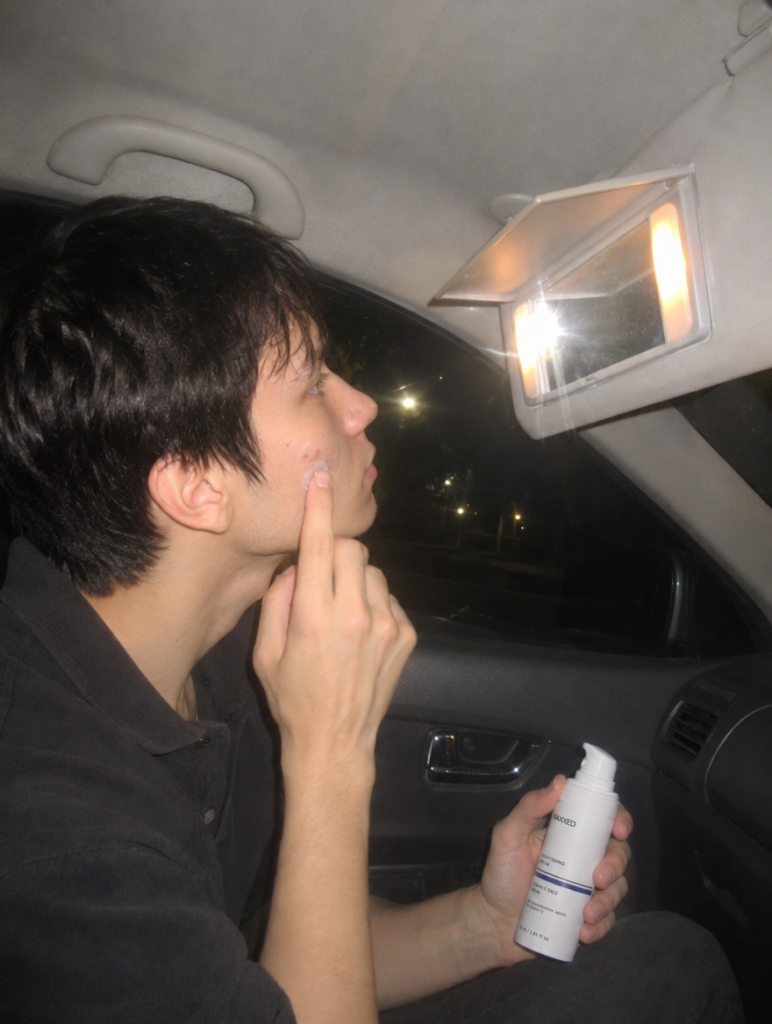
For a spot or a red patch, apply a tiny amount directly on it with a clean fingertip or sponge, press rather than drag and blend only the edge. Avoid picking at active spots, and keep your tools clean.
Common mistakes to avoid
- Applying concealer first and moisturiser after.
- Choosing a shade under artificial store lighting only.
- Using a heavy powder over the whole face.
- Going to bed with it on. Cleanse in the evening with your usual cleanser.
Common questions
Can men wear concealer without anyone noticing?
Yes, if it’s matched to your skin, applied sparingly and blended well. The goal isn’t to look made-up. It’s to look like you slept well.
Is concealer bad for your skin?
Not by default. Problems usually come from not cleansing it off, from reactions to specific ingredients, or from sharing tools. Patch test any new product and cleanse every evening.
Do I need foundation as well?
No. Many men only need spot correction, which is why concealer is a sensible starting point.
Can skincare help dark circles?
Daily sun protection and consistent skincare support healthy-looking skin, and good habits help how rested you look. Don’t expect a cosmetic to treat the underlying cause.
Where MAXXED comes in
MAXXED Complexion is planned as the second range, starting with a concealer, and only once the shades work on real people and we can show the application clearly. Skincare comes first. Subtle correction for what lighting and cameras expose comes second, with nothing that looks like you’re wearing anything.
New to skincare? Start with the 3-product routine and get the foundation right first.
- Tags: complexion, concealer for men, dark circles